Dubai Flat Prices in Indian Rupees: Every Danube Project, Converted (2026)
As of October 2026, Dubai flats by Danube Properties start at AED 871,000 — about ₹2.14 crore at ₹24.60 per AED (indicative). Eleven live projects run from ₹2.14 crore to ₹9.10 crore, most on roughly 1% monthly payment plans, with handovers between Q1 2027 and Q4 2029.
Every live Danube project: price in AED and in rupees (October 2026)
This is the table most sites make you WhatsApp four brokers to get. Starting prices below are as published by the developer, October 2026 — they move with tranches, so treat them as the floor of each project, not a quote. Rupee figures use ₹24.60 per AED (October 2026, indicative).
| Project | Area | From (AED) | From (₹ approx) | ≈1% a month in ₹ | Handover |
|---|---|---|---|---|---|
| Timez | Dubai Silicon Oasis | 871,000 | ₹2.14 Cr | ₹2.14 L | Q2 2028 |
| Aspirz | Dubai Sports City | 879,000 | ₹2.16 Cr | ₹2.16 L | Q4 2028 |
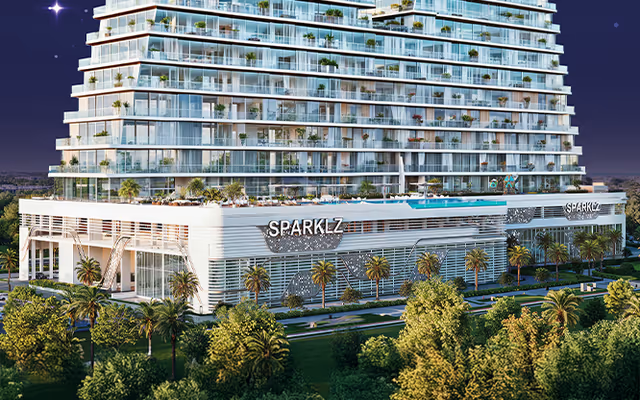
| Sparklz | Al Furjan | 900,000 | ₹2.21 Cr | ₹2.21 L | Q2 2028 |
| Diamondz | Jumeirah Lake Towers | 1,100,000 | ₹2.71 Cr | ₹2.71 L | Q4 2027 |
| Serenz | JVC | 1,100,000 | ₹2.71 Cr | ₹2.71 L | 2029 |
| Bayz 101 | Business Bay | 1,175,000 | ₹2.89 Cr | ₹2.89 L | Q2 2028 |
| Oceanz 3 | Dubai Maritime City | 1,200,000 | ₹2.95 Cr | ₹2.95 L | Q1 2027 |
| Breez | Dubai Maritime City | 1,250,000 | ₹3.08 Cr | ₹3.08 L | 2029 |
| Fashionz | JVT | 1,513,000 | ₹3.72 Cr | ₹3.72 L | Q3 2027 |
| Bayz 102 | Business Bay | 2,400,000 | ₹5.90 Cr | ₹5.90 L | 2029 |
| Greenz (villas) | Academic City, Dubailand | 3,700,000 | ₹9.10 Cr | ₹9.10 L | Q4 2029 |
A quick mental shortcut: at 1% a month, the monthly instalment in lakhs equals the price in crores. A ₹2.46 crore flat means roughly ₹2.46 lakh a month during construction. The 1% column above is a reference only — actual Danube plans run from 0.5% to 2% monthly depending on the project and tranche (Timez, for example, currently carries a 0.5% structure). Our live, project-by-project comparison sits at Dubai payment plans. Every Danube location above is in a designated freehold zone, so Indian citizens own outright — no UAE residency, no local partner.
What does ₹2.2 crore buy in Dubai vs Mumbai?
With ₹2.1–2.5 crore in October 2026, Dubai gives you a new freehold studio or 1BHK with gross rental yields around 6–8% (2025 market data). The same budget in Mumbai typically buys a suburban 1BHK yielding roughly 3–4% gross. These are market-data ranges, not promises — net yields run lower after service charges.
Seedha comparison, because this is the real decision most buyers are making. A ₹2.1–2.5 crore budget covers the entry tickets at Timez (₹2.14 Cr), Aspirz (₹2.16 Cr) and Sparklz (₹2.21 Cr). These are new-build units in freehold zones, bought directly from the developer with no agent fee to you.
On yields, 2025 market data (gross, citywide — not our projection): Dubai apartments averaged roughly 6.8–7%. Area-wise: JVC/JVT about 7.3–7.8%, Sports City 7.8–8.3%, Dubai Silicon Oasis 7.5–8.5%, Business Bay 6.5–6.9%. Net of service charges and vacancy, expect roughly 1.5–2.5 percentage points lower — an honest band of 6–8% gross, ~4.5–6% net.
A Mumbai 1BHK at a similar budget typically rents at around 3–4% gross (market data). Rental taxation differs too — rent from a Dubai flat is taxable in India for residents, with DTAA credit available; consult your CA on your specific case.
- Dubai pros: higher rental yield band, AED (dollar-pegged) rent, payment plan spreads the outflow over years.
- India pros: no FX risk, you can visit the asset any weekend, familiar legal system, home-loan leverage is easier.
Neither is 'better' — they solve different problems. Dubai suits buyers who want rental income and dollar-linked diversification; your hometown flat suits end use. What you should not do is compare a Dubai yield against an Indian one without netting out service charges on both sides.
What actually leaves India: the full rupee math
The sticker price is not the cheque you write. Here is the full stack for an off-plan Dubai flat, using an AED 1M (≈ ₹2.46 Cr) unit as the worked example:
- Property price: AED 1,000,000 ≈ ₹2.46 Cr, paid in instalments per the plan.
- DLD transfer fee: 4% — AED 40,000 ≈ ₹9.84 L, plus small admin charges.
- Oqood registration for off-plan units (modest fixed fee).
- Agent fee: none when you buy off-plan directly from the developer. (Resale typically costs 2%.)
- After handover: annual service charges, billed per sq ft — budget for them before believing any yield number.
Then there is TCS — which is a cashflow, not a cost. Banks collect it when you remit under LRS, and you claim it back as credit in your ITR:
| Remitted in one FY | TCS collected | Leaves your account | Claimable in ITR |
|---|---|---|---|
| ₹50 lakh | ₹8 lakh (20% above ₹10L) | ₹58 lakh | ₹8 lakh |
| ₹2.5 crore | ₹48 lakh | ₹2.98 crore | ₹48 lakh |
Two planning notes. First, the LRS cap is USD 250,000 per resident individual per financial year — depending on the dollar rate on the day, a ₹2.5 crore remittance by one person can brush against it; family members who are co-owners of the property can each remit (four co-owners = USD 1 million of headroom), or you spread payments across financial years — which a monthly payment plan does naturally. Check the cap math with your bank. Second, if two co-owners split ₹2.5 crore, each gets their own ₹10 lakh nil slab, so total TCS drops to about ₹46 lakh. Structuring is your CA's job — consult them before remitting.
Want the live Danube price list in rupees?
Starting prices move with developer tranches. WhatsApp us for today's list with ₹ conversions and the payment-plan math for your budget — 10:00–19:00 IST. We're a registered Danube channel partner: developer prices, and your money goes only to developer/DLD escrow, never to us.
WhatsApp the price listThe 1% monthly plan, translated into rupees
The reason a ₹2.4 crore Dubai flat feels closer than a ₹2.4 crore Indian flat is the payment schedule. The typical Danube structure: around 10% at booking, then 0.5–1% of the price every month through construction (occasionally 2%), and on many projects a post-handover tail of 26–35% that you keep paying after you get the keys — potentially while the unit earns rent. Schedules genuinely vary per project and tranche, so check the live grid at payment plans before anchoring on any number.
In rupees, on an AED 1M unit at ₹24.60/AED (October 2026, indicative): booking ≈ AED 100,000 ≈ ₹24.6 lakh, then 1% ≈ AED 10,000 ≈ ₹2.46 lakh a month. At Timez, entry AED 871K on a 0.5% structure, the monthly runs closer to ₹1.07 lakh. That is EMI-sized money without an EMI — no loan, no interest, no foreclosure charges. The trade: miss instalments and the developer's default clauses apply, so size the monthly against your worst month, not your best.
Where the money goes matters more than the schedule. Every dirham you pay on a Dubai off-plan purchase goes into the project's DLD-registered escrow account, released to the developer only against construction milestones. We never collect money at Ambervista — payments go to the developer's escrow or DLD, full stop. For the mechanics tranche by tranche, read our sibling guide: the Danube 1% payment plan, explained.
Remittance rules in 2026 — and where most websites are wrong
Three rules changed recently, and a lot of ranking pages haven't caught up. The record, corrected:
- TCS: many sites still say ₹7 lakh. That threshold changed on 1 April 2025 — TCS is now NIL up to ₹10 lakh of LRS remittances per financial year, and 20% only on the amount above ₹10 lakh. It's PAN-based across all your banks, and fully claimable as credit in your ITR. (From April 2026 the provisions sit under the new Income-tax Act — your CA will map the sections.)
- 2-year Dubai investor visa: most pages still say AED 750,000 minimum. In April 2026, DLD removed the minimum property value for sole owners — joint owners need a stake of at least AED 400K each. Freehold residential, DLD-registered; mortgaged property needs a bank NOC. This is Dubai-specific.
- Golden Visa (10-year): property value of AED 2 million or more; off-plan is generally eligible per practitioner guidance. Early-2026 reports suggest the older 50%-paid requirement for mortgaged and off-plan cases was eased, but sources conflict on the exact valuation basis — confirm the current basis with DLD/GDRFA before relying on it. Joint owners need their own share to be ≥ AED 2M.
On any visa: you may be eligible, subject to government criteria — nobody can promise you a visa, and you should treat any site that does as a red flag. The LRS basics stay the same: USD 250,000 per resident individual per financial year, overseas property is a permitted purpose, and anything above the cap needs RBI approval. For the step-by-step process — documents, bank forms, POA — see how to buy Dubai property from India.
Will the rupee ruin the math? FX risk, honestly
The dirham is pegged to the US dollar, so your rupee cost moves with USD/INR. A weaker rupee makes later instalments costlier in ₹; a stronger rupee makes them cheaper. We quote ₹24.60 per AED (October 2026, indicative) — your bank's rate on each transfer day is the one that counts.
Every rupee figure on this page is a snapshot. You are not buying at one exchange rate — on a three-to-four-year payment plan you buy dirhams thirty-plus times, at thirty-plus different rates. That cuts both ways: if the rupee weakens over the plan, your later instalments cost more in rupee terms than the table above shows; if it strengthens, less. Think of it as rupee-cost averaging on your purchase — you won't catch the best rate, you won't be stuck with the worst.
Two honest observations rather than predictions. One: a weaker rupee also inflates the rupee value of the dirham asset you now own, and of the dirham rent it earns — the exposure is symmetric, which is precisely why some buyers want it. Two: once the flat is rented, AED rental income is a natural hedge against your remaining AED instalments on a post-handover plan — rent comes in and instalments go out in the same currency.
What we won't do is forecast USD/INR for you, and you should be suspicious of anyone who will. If currency exposure genuinely worries you, that's a conversation for your financial advisor — and a reason to keep your Dubai allocation to a size whose rupee cost could rise 10% without disturbing your sleep. Budget your monthly instalment with headroom, not at the edge.
What can go wrong — the honest list
We'd rather you hear this from us than discover it later. The risks, and what actually mitigates each:
- Oversupply. Analyst reports (2025–26) put roughly 100K units scheduled for 2026 delivery and ~75K for 2027, with about 66% of the pipeline concentrated in studios/1BRs across five districts — including JVC/JVT, Business Bay and Dubailand. Price growth is still positive but decelerating: +22% in 2023, +18% in 2024, +13% in 2025. Mitigation: buy for the payment-plan affordability and the rental yield, not for price speculation. If the price flatlines for three years, does the deal still work for you? If not, don't do it.
- Delays. Historically only ~48% of announced Dubai units deliver on time. Mitigation: escrow protects your capital against milestones, but not your time — prefer nearer-handover projects like Oceanz 3 (Q1 2027), Fashionz (Q3 2027) or Diamondz (Q4 2027) if timing matters to you.
- Exchange rate. Covered above — size the commitment with headroom.
- Yield compression. If many 1BRs hit the same districts at once, rents in those pockets can soften. The 6–8% gross band is 2025 market data, not a projection of your unit's future.
- Middlemen. The simplest protection: never pay an agent or 'partner' directly. On a Dubai off-plan purchase, money goes only to the developer's DLD-registered escrow account or to DLD itself. That is exactly how we operate — Ambervista is a registered Danube channel partner, you get developer prices, and we never touch your funds.
If after all this the math still works — and at these payment plans it often does — you're buying with open eyes. That's the only kind of buyer we want on WhatsApp.
FAQs
Can I pay for a Dubai flat directly in Indian rupees?
No. The purchase is priced and paid in AED. You remit from your Indian bank account under the RBI's Liberalised Remittance Scheme (LRS) — overseas property is a permitted purpose — and the bank converts rupees to dirhams at its rate on the day. The converted amount goes into the project's DLD-registered escrow account (for off-plan) or to the seller via the DLD process. Two things to insist on: the remittance goes from your own account, and it lands in the developer's escrow or DLD — never in an agent's or 'consultant's' personal or company account. Any intermediary asking you to pay them directly in rupees or cash is a walk-away signal. Ambervista never collects payments; our role ends at developer price lists, paperwork and coordination.
What is the minimum budget in rupees to buy a Dubai flat in 2026?
On the current Danube list (developer-published, October 2026), the entry ticket is Timez at AED 871,000 — about ₹2.14 crore at ₹24.60/AED (indicative). Aspirz (AED 879K ≈ ₹2.16 Cr) and Sparklz (AED 900K ≈ ₹2.21 Cr) sit just above. Add roughly 4–5% for the DLD transfer fee (4%), Oqood registration and admin — about ₹9–11 lakh on an entry unit. There's no agent fee when you buy off-plan directly from the developer. The cashflow reality is gentler than the headline: booking around 10%, then 0.5–1% of the price monthly, so the first-year outflow on an entry unit is typically in the ₹45–60 lakh range rather than ₹2.2 crore upfront. TCS applies above ₹10 lakh of remittances per FY but comes back as ITR credit — consult your CA.
Will buying a flat get me a UAE residence visa?
You may be eligible, subject to government criteria — no honest adviser promises visas. Two routes exist. The 2-year Dubai investor visa: in April 2026, DLD removed the previous AED 750,000 minimum property value for sole owners (many websites still quote the old figure); joint owners need a stake of at least AED 400K each, the property must be freehold residential and DLD-registered, and mortgaged property needs a bank NOC. The 10-year Golden Visa needs property worth AED 2 million or more (about ₹4.92 crore at October 2026 rates, indicative); off-plan is generally eligible per practitioner guidance, and each joint owner's own share must be ≥ AED 2M. Reports from early 2026 say requirements for mortgaged/off-plan cases were eased, but sources conflict on the valuation basis — confirm the current rules with DLD/GDRFA before making the visa the reason you buy.
How much TCS will I pay on a ₹1 crore remittance?
About ₹18 lakh collected — but read the second half. TCS on LRS property remittances is NIL up to ₹10 lakh per financial year (threshold raised from ₹7 lakh on 1 April 2025 — many sites still show the old number) and 20% on the amount above it. On ₹1 crore: 20% of ₹90 lakh = ₹18 lakh. It's tracked against your PAN across all banks, so splitting a remittance between two banks doesn't reset the slab. Crucially, TCS is not a tax cost — it's an advance collection you claim as credit in your ITR, offsetting tax payable or coming back as refund. Plan the cashflow (you need the ₹18 lakh available in the transfer year), and have your CA handle the credit. From April 2026 these provisions sit under the new Income-tax Act.
Do I have to declare my Dubai flat to Indian tax authorities?
Yes, if you're an Indian tax resident. Foreign assets — including an overseas flat and any foreign bank account used for it — must be disclosed in Schedule FA of your income tax return. Non-disclosure carries serious penalties under the Black Money Act, so this is not a 'file it next year' item. Rental income from the Dubai flat is taxable in India for residents; the India–UAE DTAA lets you claim credit so you're not taxed twice on the same income. NRIs are in a different position — their Dubai income is generally outside Indian tax, but residency status has precise day-count rules. Get your CA involved before the first remittance, not after the first rent credit. We coordinate paperwork; we don't give tax advice.
Is the 7% rental yield real, or broker math?
It's real as a gross, citywide 2025 market average — and incomplete as a projection for your unit. The 2025 market data: Dubai apartments overall ~6.8–7% gross; JVC/JVT ~7.3–7.8%; Dubai Sports City ~7.8–8.3%; Dubai Silicon Oasis ~7.5–8.5%; Business Bay ~6.5–6.9%. Gross means before costs. Net of annual service charges (billed per sq ft) and vacancy periods, yields typically land 1.5–2.5 percentage points lower. So the honest band we quote: 6–8% gross, roughly 4.5–6% net. Those are market-data ranges, not our projection and not a promise — heavy 1BR supply arriving in some districts through 2026–27 could soften rents in exactly those pockets. Always run your numbers on net yield with a vacancy month built in.
Can I buy without flying to Dubai?
Yes. Indian citizens buy in Dubai's 50+ designated freehold zones with no UAE residency and no local partner — every current Danube location is in a freehold zone. The purchase can be completed remotely through a power of attorney, and off-plan bookings are routinely done with passport copies and digital signatures, with payments remitted bank-to-escrow from India. That said, we'd still suggest one trip before handover if you can manage it — seeing the district, the construction progress and the competing towers teaches you things a brochure won't. Process-wise, everything runs on WhatsApp and email: shortlist, developer price list, booking form, escrow remittance details, Oqood registration. We're available 10:00–19:00 IST.
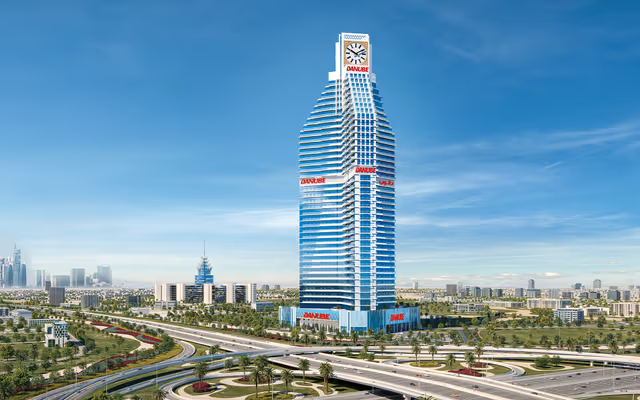
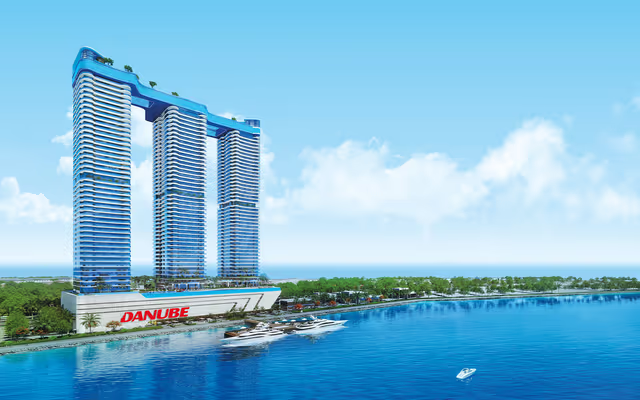
Projects this guide points to
Want the live Danube price list in rupees?
Starting prices move with developer tranches. WhatsApp us for today's list with ₹ conversions and the payment-plan math for your budget — 10:00–19:00 IST. We're a registered Danube channel partner: developer prices, and your money goes only to developer/DLD escrow, never to us.