Can Indians Buy Property in Dubai? Yes — Here's the 2026 Rulebook
Yes. Indian citizens can buy freehold property in Dubai outright — no UAE residency, no local partner — in 50+ designated freehold zones, a right foreign buyers have held since 2002. RBI's LRS lets each resident remit up to USD 250,000 per financial year, and the whole purchase can be completed from India via power of attorney.
Yes — and it has been legal since 2002
In 2002, Dubai opened designated freehold zones to foreign buyers. Since then, an Indian passport holder can own an apartment or villa outright: the title deed is issued in your name by the Dubai Land Department (DLD), and you can sell, rent out, gift or mortgage the property. Ownership does not expire, and there is no leasehold clock ticking in these zones.
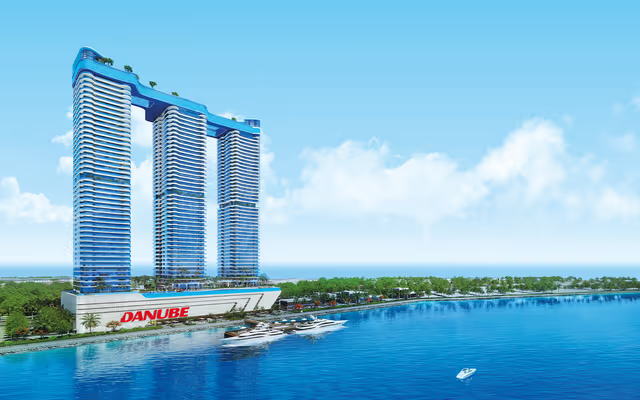
Three things you do not need: a UAE residency visa, a local sponsor or partner, and — if you plan it right — even a flight to Dubai. More than 50 zones are open to foreign ownership, including Business Bay, Jumeirah Village Circle (JVC), Jumeirah Village Triangle (JVT), Dubai Marina, Dubai Maritime City, Sports City and Dubai Silicon Oasis. Every location Danube Properties builds in is a freehold zone, so projects like Serenz and Bayz 101 are open to Indian buyers by default — no special permission needed.
Cannot travel? A power of attorney lets a representative sign and register on your behalf. NRIs and resident Indians both use this route routinely; banks and the DLD are used to it. So the legal question is settled — the real homework is the money trail (RBI's LRS), the tax collected at source on your remittance, and the paperwork chain. That is what the rest of this guide walks through, number by number.
Six myths Indian buyers still believe
Most of what holds Indian buyers back is folklore — usually copied from blog posts written years ago and never updated. Here is the quick correction table, current as of October 2026:
| Myth | Fact (Oct 2026) |
|---|---|
| "I need a UAE visa to buy" | No. Ownership and residency are separate. You can own with zero UAE status. |
| "Buying automatically gets me a visa" | Not automatic. You may be eligible to apply — 2-year or 10-year routes exist, subject to government criteria. Details below. |
| "I must fly to Dubai to sign" | No. A power of attorney allows a fully remote purchase and registration. |
| "It's cash-only for foreigners" | No. Developer payment plans spread the cost through construction (live comparison here), and non-resident mortgages typically run 50–75% LTV (market data). |
| "Only locals and GCC nationals get title deeds" | No. In freehold zones, any nationality gets a DLD title deed in their own name. |
| "My off-plan money goes straight to the builder's pocket" | No. Payments go only into the project's DLD-registered escrow account, released against construction milestones. |
Why do these myths survive? Because Dubai's rules have changed fast — twice in the last two years on visas alone — and most pages ranking on Google were written before the changes. Wherever a rule changed recently, we flag the old number and the new one in this guide, with the date it changed.
What you actually own: SPA → Oqood → title deed
Buy off-plan and your proof of ownership evolves in three steps. Know all three before you pay a dirham:
- SPA (Sale and Purchase Agreement). Your contract with the developer — unit details, specifications, payment schedule, handover window, and penalties. Read the delay and termination clauses before signing, not after.
- Oqood. The DLD's interim registration for off-plan property. Once registered, your purchase exists in the government's system in your name — this is your protection between booking and handover, and in practice the Oqood value is also what gets used for visa-eligibility math before the title deed exists.
- Title deed. Issued by the DLD at handover once payments are settled per the SPA. This is the final ownership document — in your name, usable as proof for banking, inheritance and resale.
One more layer of protection sits underneath all of this: escrow. Dubai law requires off-plan payments to go only into the project's DLD-registered escrow account, and money is released to the developer against certified construction milestones — not on demand.
Our own rule at Ambervista is stricter still: we never collect purchase money. Booking amounts and instalments go to the developer's escrow account or the DLD directly. If any agent, anywhere, asks you to transfer purchase money into their personal or company account — walk away.
Want the exact ₹ math for your budget?
Tell us your budget on WhatsApp — we reply with developer price lists, the payment schedule and every fee converted to ₹. Payments go only to the developer's DLD escrow, never to us. 10:00–19:00 IST.
WhatsApp AmbervistaThe India side: LRS, TCS and what your bank will ask
Under RBI's Liberalised Remittance Scheme (LRS), every resident Indian can remit up to USD 250,000 per financial year, and buying property abroad is a permitted purpose. The cap is per person, cumulative across all your banks — not per bank. Families use this legally and well: if four family members are co-owners on the title, each can remit their own USD 250,000, which is USD 1 million in a single financial year. Anything above the cap needs specific RBI approval — rare, and not something to assume.
Now the part most websites get wrong. Many pages still say TCS applies above ₹7 lakh — the rule changed on 1 April 2025. The current position: NIL tax collected at source up to ₹10 lakh of LRS remittances per financial year, and 20% on the amount above ₹10 lakh for property remittances, tracked PAN-wise across banks under the Income-tax Act.
Worked example, as of Oct 2026 (FX ₹24.60/AED, indicative): remit AED 1M ≈ ₹2.46 Cr in one financial year. TCS = 20% of (₹2.46 Cr − ₹10 L) ≈ ₹47.2 lakh. That sounds brutal, but it is not a cost — it is fully claimable as credit when you file your ITR. It is a cash-flow item, so plan your remittance timing around it; spreading payments across financial years (which a monthly payment plan naturally does) spreads the TCS too.
Two more India-side duties: your Dubai property must be disclosed in Schedule FA of your ITR (non-disclosure carries penalties under the Black Money Act), and rental income is taxable in India for residents, with DTAA credit for any UAE-side relief. NRIs are treated differently on all of this — consult your CA before you remit, not after. For the full step-by-step money trail, see our guide on how to buy Dubai property from India.
What it costs beyond the sticker price
The quoted price is not the final price anywhere in the world, and Dubai is no exception. The good news: Dubai's fee stack is short and predictable. Here is what sits on top, with the ₹ math on an AED 1M purchase:
| Cost | How much | On AED 1M (≈ ₹2.46 Cr*) |
|---|---|---|
| DLD transfer fee | 4% of property value + admin charges | AED 40,000 ≈ ₹9.84 L |
| Oqood registration (off-plan) | Per DLD's published schedule, paid at booking | Confirm per project before booking |
| Agent fee | Usually 2% on resale; off-plan direct from the developer: nil to buyer | ₹0 on Danube off-plan via us |
| Service charges | AED per sq ft, annually, varies by tower | Ask for the current rate per project |
*FX ₹24.60/AED as of Oct 2026, indicative — your bank's rate on transfer day is what actually applies.
A practical planning number: for off-plan bought direct from the developer, keep roughly 5% over the quoted price aside for one-time fees, with the 4% DLD fee doing most of that damage. There is no annual property tax in Dubai and no tax on rental income on the UAE side — but service charges are the recurring cost people forget, and they directly decide whether your gross yield survives as net yield. Always get the per-sq-ft service charge in writing for the specific tower. For how the purchase price itself can be spread into 0.5–2% monthly instalments, see the payment plan comparison.
Visas: what buying can and cannot get you in 2026
Let us be precise, because this is where agents over-promise. Buying property does not hand you a visa — it can make you eligible to apply, subject to government criteria that change. Two routes exist as of October 2026:
The 2-year Dubai investor visa. Here is a change most ranking pages have missed: in April 2026, the DLD removed the AED 750,000 minimum property value for sole owners. If you still read "minimum AED 750K" somewhere, that page is stale. The current position: no minimum value for a sole owner; joint owners need a stake of at least AED 400,000 each; the property must be freehold residential and DLD-registered; mortgaged property needs a bank NOC. This route is Dubai-specific.
The 10-year Golden Visa. The headline threshold is property value of AED 2 million or more. Off-plan is generally eligible, with the Oqood value counting per practitioner guidance. Reports from February–April 2026 suggest the earlier requirement of 50% paid / AED 1M paid for mortgaged and off-plan property was eased — but sources conflict on the exact valuation basis for mortgaged units, so confirm the current basis with the DLD/GDRFA before relying on it. Joint owners: your own share must be AED 2M or more.
Price context, at Danube's published Oct 2026 entry prices: Bayz 101 from AED 1.175M (≈ ₹2.89 Cr) sits comfortably in 2-year-visa territory for a sole owner; the 10-year route needs AED 2M+, where Bayz 102 (from AED 2.4M) is the natural fit. Full thresholds, documents and timelines are in our dedicated Golden Visa guide.
Inheritance: register a will, don't rely on your Indian one
This is the least discussed and most important paragraph in this guide. If a property owner dies, UAE courts can apply local succession rules to UAE assets by default — and those rules distribute assets differently from what your Indian will says. Your home-country will is not automatically enforced over a Dubai apartment.
The clean fix exists and is routine: non-Muslim foreign owners can register a will covering their UAE assets with the DIFC Wills Service Centre or through the Dubai Courts, directing exactly who inherits the property, in what shares, and who acts as guardian for minor children. Do this at or soon after handover — not "someday". It is an administrative task, not a legal battle, when done in advance; it becomes a genuinely painful cross-border process for your family when it is not.
Keep the paperwork aligned on both sides: the registered UAE will, your Indian will, the ownership shares on the title deed, and your Schedule FA disclosure should all tell the same story. Cross-border succession involving India and the UAE has moving parts — forced-heirship questions, DTAA, NRI versus resident status — so treat this paragraph as a checklist, not advice: consult a cross-border estate advisor before and after you buy.
What can go wrong — read this before you WhatsApp us
If a page only tells you the upside, it is an ad, not a guide. Here is the honest risk list for 2026:
- Oversupply is real. Around 100,000 units are scheduled for 2026 and roughly 75,000 more in 2027. Two softeners: historically only about 48% of scheduled units deliver on time, and the pipeline is heavily concentrated — about 66% is studios and 1BRs across five districts (including JVC/JVT, Business Bay and Dubailand). Translation: unit type and district selection matter more than the citywide headline.
- Price growth is decelerating. +22% in 2023, +18% in 2024, +13% in 2025. Still positive, clearly slowing. If your plan only works with another +20% year, it is not a plan.
- Exchange-rate risk cuts both ways. Your instalments are in AED. If the rupee weakens, every future instalment costs more in ₹; if you later repatriate rent or sale proceeds, the same move works for you. Budget instalments at a worse rate than today's ₹24.60/AED, not a better one.
- Yields: use the net number. Gross apartment yields run 6–8% depending on area (2025 market data — not our projection); after service charges and vacancy, net is typically ~4.5–6%. Anyone quoting only gross is selling, not advising.
Our position, stated plainly: buy Dubai in 2026 for payment-plan affordability and rental yield, not for speculative price bets — and prefer projects nearer to handover, where delivery risk and the supply question are smaller. That is why nearest-handover projects like Oceanz 3 (Q1 2027, from AED 1.2M) sit at the top of our own shortlists.
FAQs
Do I need a UAE visa or residency to buy property in Dubai?
No. Property ownership and residency are completely separate in Dubai. An Indian citizen with no UAE visa, no Emirates ID and no local partner can buy freehold property in any of the 50+ designated freehold zones and receive a title deed from the Dubai Land Department in their own name. You also do not need to be physically present: a power of attorney lets a representative complete the signing and registration while you stay in India. The residency question only enters the picture the other way around — after buying, you may become eligible to apply for an investor visa, subject to government criteria. Buying first, visa later (and optional) is the correct order to think about it.
How much money can I legally send from India to buy in Dubai?
Under RBI's Liberalised Remittance Scheme, each resident Indian can remit up to USD 250,000 per financial year, and overseas property purchase is a permitted use. The limit is per person and cumulative across all your banks. Families routinely combine limits: four family members who are co-owners on the title can remit USD 250,000 each — USD 1 million in one financial year. Remitting above the cap requires specific RBI approval. On tax collected at source: NIL up to ₹10 lakh per financial year, then 20% on the amount above ₹10 lakh for property remittances — note the threshold was raised from ₹7 lakh on 1 April 2025, so ignore older pages. The TCS is fully claimable as credit in your ITR. Plan the timing with your CA.
Will buying a property get me a UAE residency visa?
It can make you eligible to apply — it is never automatic, and criteria are set and changed by the government. As of October 2026 there are two property-linked routes. The 2-year Dubai investor visa: in April 2026 the DLD removed the AED 750,000 minimum property value for sole owners; joint owners need at least an AED 400,000 stake each, the property must be freehold residential and DLD-registered, and mortgaged property needs a bank NOC. The 10-year Golden Visa: property value of AED 2 million or more, with off-plan generally eligible on Oqood value per practitioner guidance; joint owners each need a AED 2M+ share. Rules on mortgaged and off-plan valuation have shifted during 2026, so confirm the current basis with the DLD/GDRFA before building your plan around a visa.
Is my money safe if I buy off-plan in Dubai?
Safer than most Indian buyers assume, because of one mechanism: escrow. Dubai law requires off-plan payments to go only into the project's DLD-registered escrow account — not to the developer's general account — and funds are released against certified construction milestones. Your purchase is also registered with the DLD (Oqood) between booking and handover, so it exists in the government's records in your name. The residual risks are delay (common — historically only about 48% of scheduled units citywide deliver on time) and market movement, not disappearing money. Our own rule adds a layer: Ambervista never collects purchase money. Every payment goes to the developer's escrow account or the DLD directly, and we would tell you to refuse any agent who asks otherwise.
What rental yield can I realistically expect in Dubai?
Use two numbers, and be suspicious of anyone who gives you one. Gross apartment yields in 2025 market data run roughly 6–8% depending on area — citywide around 6.8–7%, JVC/JVT about 7.3–7.8%, Sports City 7.8–8.3%, Dubai Silicon Oasis 7.5–8.5%, Business Bay 6.5–6.9%. These are market figures, not our projection. Net yield — after annual service charges and realistic vacancy — typically lands 1.5 to 2.5 points lower, so think ~4.5–6% net. That is still strong next to the 2–3% gross typical of Indian metro apartments, but the service charge per sq ft on your specific tower decides where in the band you land. Get it in writing before booking, and run your numbers on net.
What happens to my Dubai property if something happens to me?
Without planning, UAE courts can apply local succession rules to your UAE assets by default — and your Indian will is not automatically enforced over a Dubai property. The standard fix for non-Muslim foreign owners is to register a will covering UAE assets with the DIFC Wills Service Centre or through the Dubai Courts, specifying exactly who inherits and in what shares. It is a routine administrative step when done in advance and a genuinely difficult cross-border process for your family when skipped. Keep your UAE will, Indian will, title deed ownership shares and ITR Schedule FA disclosure consistent with each other, and take proper advice — consult a cross-border estate advisor, because NRI versus resident status and DTAA questions change the details.


Want the exact ₹ math for your budget?
Tell us your budget on WhatsApp — we reply with developer price lists, the payment schedule and every fee converted to ₹. Payments go only to the developer's DLD escrow, never to us. 10:00–19:00 IST.